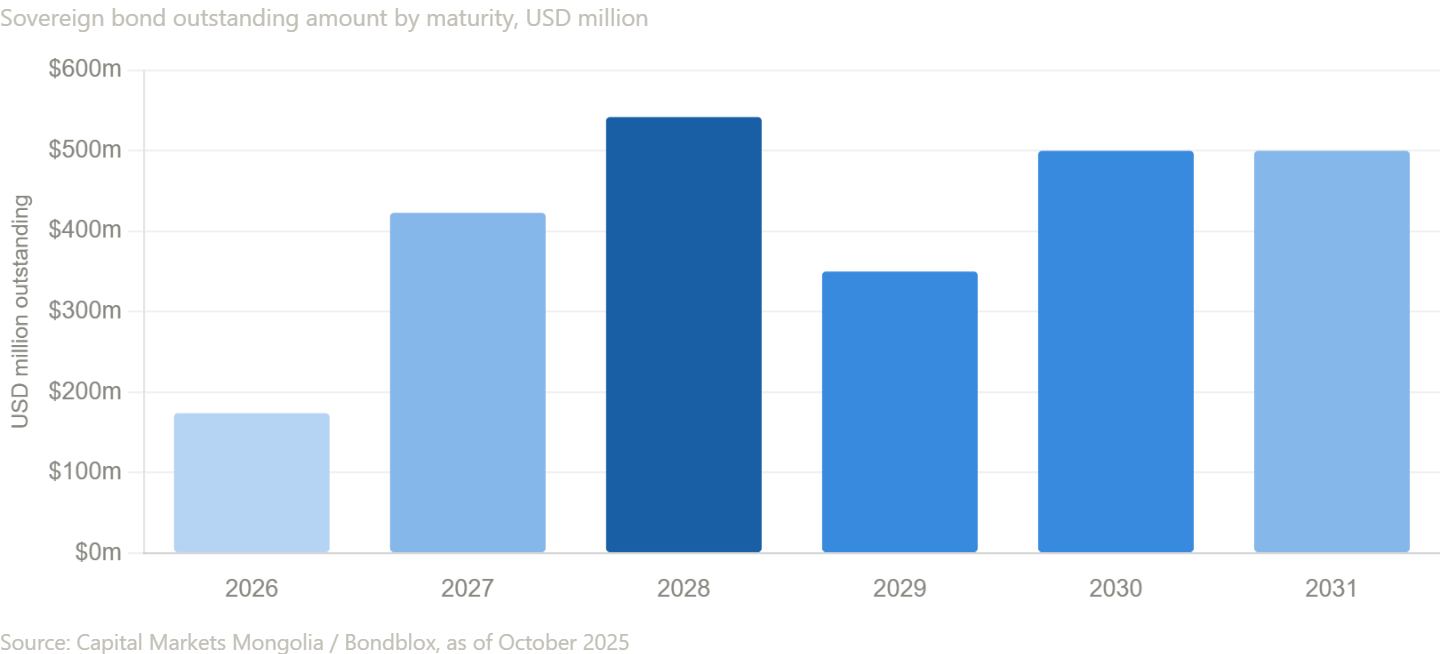
Mongolia’s sovereign curve now tells one of the more useful frontier-market rehabilitation stories in Asia. In 2025, the country held approximately US$2.5 billion in sovereign bonds outstanding across six instruments, with maturities from April 2026 through July 2031, according to Capital Markets Mongolia. The headline is not simply that Mongolia hit trouble, accepted IMF support, reformed, and regained market access. It is that Mongolia rebuilt its debt architecture in a way investors can now price, compare, and underwrite.
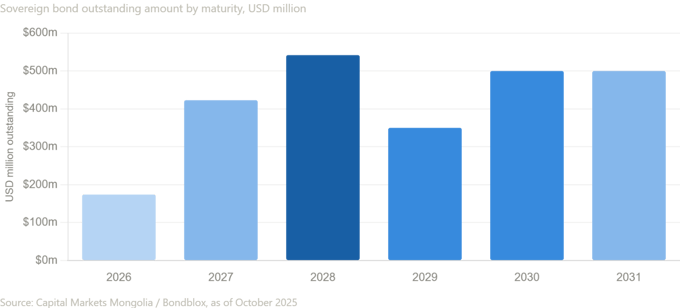
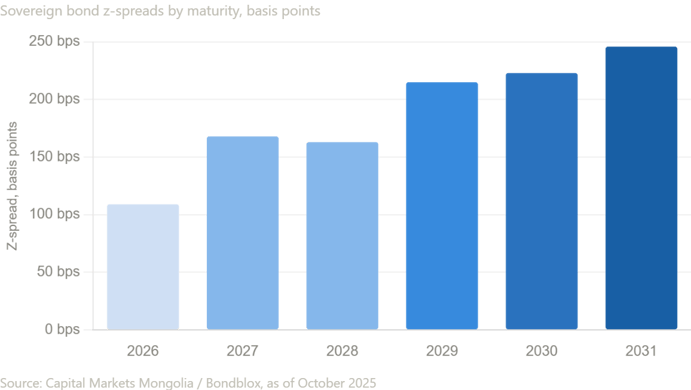
The 2026 bond has run down to US$174 million outstanding from US$600 million raised. It prices at 99.8 with a z-spread of 109 basis points. Near-par pricing on a bond months from maturity reflects the orderly management of a redemption that, in 2022, looked genuinely uncertain. The government navigated it without turning the maturity wall into a crisis.
Mongolia’s spread gradient, from 109 to 246 basis points across five years of additional tenor, is a rational and coherent frontier risk curve. A few years ago, Mongolia did not have one. The 2028 instrument trades at 106.0, with a coupon of 8.65% and a YTM of 5.55%. The 2029 trades at 105.9. They trade above par despite global rate tightening, because their coupons are still attractive. The z-spreads on these instruments, at 163 and 215 basis points respectively, reflect a frontier premium but not a distressed one. The 2031 bond, at 88.9 and a z-spread of 246 basis points, shows where the market still demands additional compensation for duration risk.
What funded this rehabilitation? The underlying GDP story is part of it. Mongolia’s economy grew from US$13.2 billion in 2018 to US$25.1 billion in 2025, according to IMF data. That near-doubling in size came through Oyu Tolgoi production ramping up, coal rail infrastructure improving, and gold exports growing. These gave the sovereign a credible revenue base from which to service its obligations.
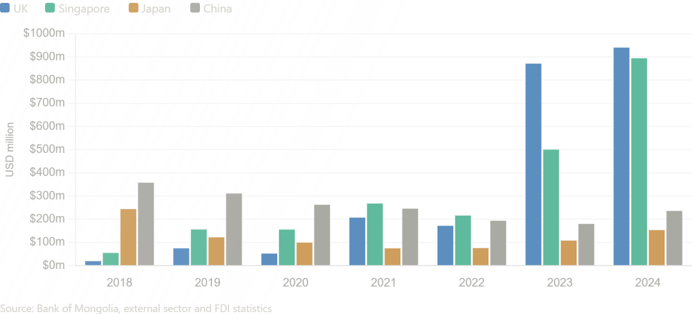
The FDI data from the Bank of Mongolia adds a layer that pure macro analysis misses. Annual inflows from the UK reached US$940 million in 2024, from US$19 million in 2018. Singapore moved from US$55 million to US$894 million over the same period. Even Japan has begun to steadily reinvest year-on-year. China’s share, by contrast, declined from US$358 million to US$236 million. Mongolia is diversifying its investor base away from single-counterparty dependency. Capital from financial centres with sophisticated risk assessment frameworks arriving at this scale is a qualitatively different kind of inflow from commodity-linked investment.
Annual FDI inflows by selected country, USD million
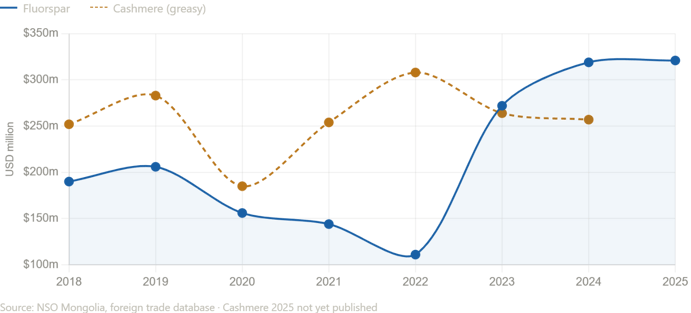
The non-mining export base signals economic activity independent of the mining cycle. Fluorspar exports reached US$321 million in 2025, up from US$190 million in 2018, according to NSO data. Cashmere, Mongolia’s most recognisable non-mineral export, held between US$254 million and US$308 million from 2021 through 2024, excluding the pandemic-affected 2020 low of US$185 million. Sovereign debt investors stress-testing default risk through a commodity downturn scenario notice export diversification at the margin.
Non-mining export values, USD million
Mongolia teaches investors that frontier sovereign rehabilitation is real, measurable, and tradable. The bond curve is there. The pricing is there. The data support it. Mongolia’s willingness to restructure maturities proactively rather than in crisis preserved creditor relationships and enabled the current curve. FDI diversification is also a leading indicator of sovereign credit improvement. The arrival of UK and Singapore capital preceded, and arguably contributed to, the tightening of spreads.
The question investors should be asking is not whether Mongolia is a safe credit. It is not, by any standard definition. The better question is whether the price of that risk, at 163 to 246 basis points on the mid-to-long curve, still offers adequate compensation for investors who do the work. For those who have, the answer has been yes for some time. The opportunity now is more selective, but still real. The gap between specialist conviction and broader market consensus is narrowing.