On July 9, 2026, South Korean President Lee Jae-myung arrived in Ulaanbaatar for the first state visit by a Korean president to Mongolia in 15 years. The three-day trip ended with both leaders declaring a "Golden Era of Korea-Mongolia Relations," 21 signed agreements, and a framework that affects investment in Mongolia's critical minerals.
On July 11, President Lee attended the opening ceremony of Mongolia's national Naadam Festival as the first South Korean president invited as guest of honor. He sat alongside Mongolian President Ukhnaagiin Khurelsukh. In Mongolian diplomatic protocol, the Naadam guest matters. Mongolia views South Korea as a key third-neighbour partner for technological, financial, and industrial integration.
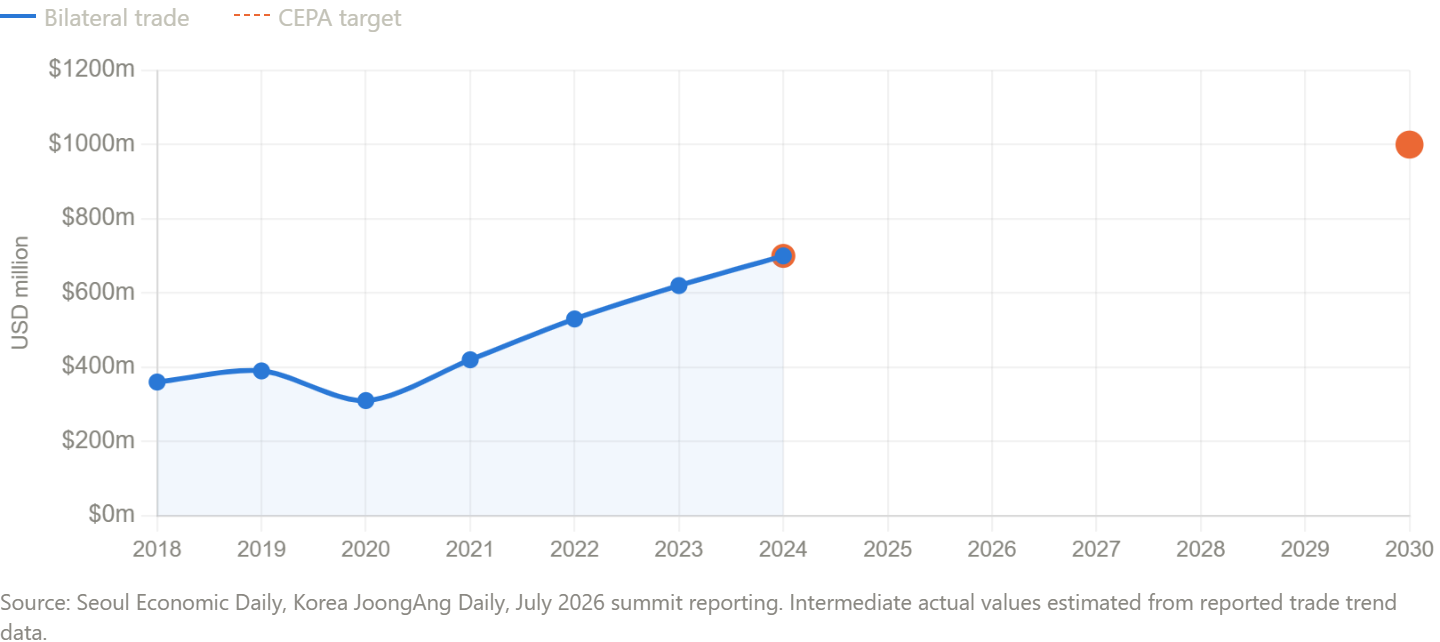
The two governments set a Comprehensive Economic Partnership Agreement that eliminates tariffs of 2 to 5% on Mongolian copper and molybdenum exports into South Korea. Both presidents agreed to lift bilateral trade from its current level of approximately U.S. $700 million annually to US $1 billion by 2030, according to the Seoul Economic Daily.
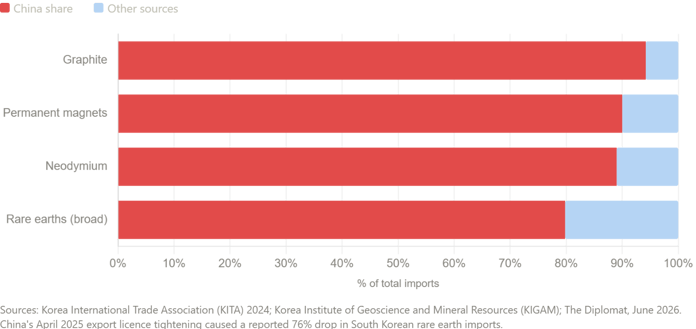
South Korea imports approximately 80% of its rare earths from China, according to Korea International Trade Association data for 2024. For permanent magnets, the dependency runs to approximately 90%, according to the Korea Institute of Geoscience and Mineral Resources. When China tightened its rare earth export licensing regime in April 2025, South Korean rare earth imports fell by a reported 76%. The country's EV battery gigafactories, semiconductor fabrication lines, and precision defence manufacturing all depend on supply chains it does not currently control. Mongolia holds an estimated 31 million tonnes of rare earth reserves, widely cited as the second-largest in the world.
For international investors, the summit provides data the market has not yet fully priced. South Korea is among Asia's largest industrial economies, and its corporate and government actors are increasingly treating Mongolia’s mineral base as an economic priority. That changes the risk profile of Mongolian critical mineral exposure in a way that FDI statistics alone cannot yet capture.
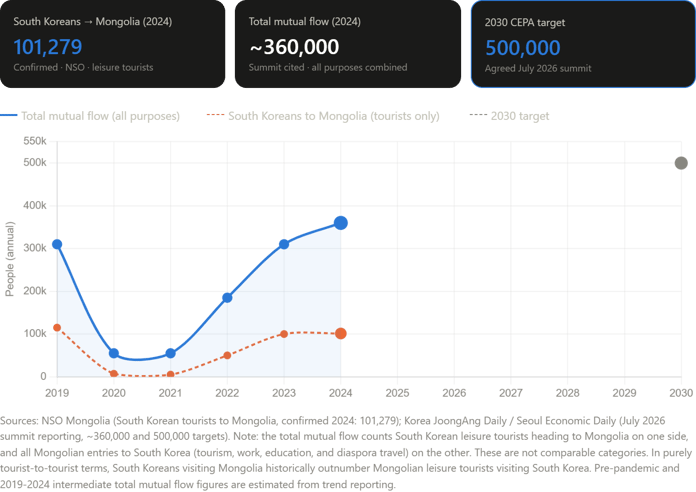
The mutual people-to-people target of 500,000 annual visitors by 2030, up from approximately 360,000 today, furthers this dynamic. The Mongtan concept President Lee raised at the business forum envisions Korean enterprises providing capital and technological expertise while Mongolian companies manage domestic operations, mirroring the model that led to South Korea’s own rapid industrialisation. Whether that concept translates into built industrial capacity will depend on execution. The institutional architecture for it exists.
South Korea and Mongolia, as demonstrated this summer, are very much strengthening their ties. South Korea has much to gain from this economic and cultural partnership, as does Mongolia. The window between framework and production is where investors with appetite for frontier complexity can generate durable returns. That window opened more visibly in Ulaanbaatar on July 9, 2026.